 Winston
You already own good companies.
You just never have time to keep up with them.
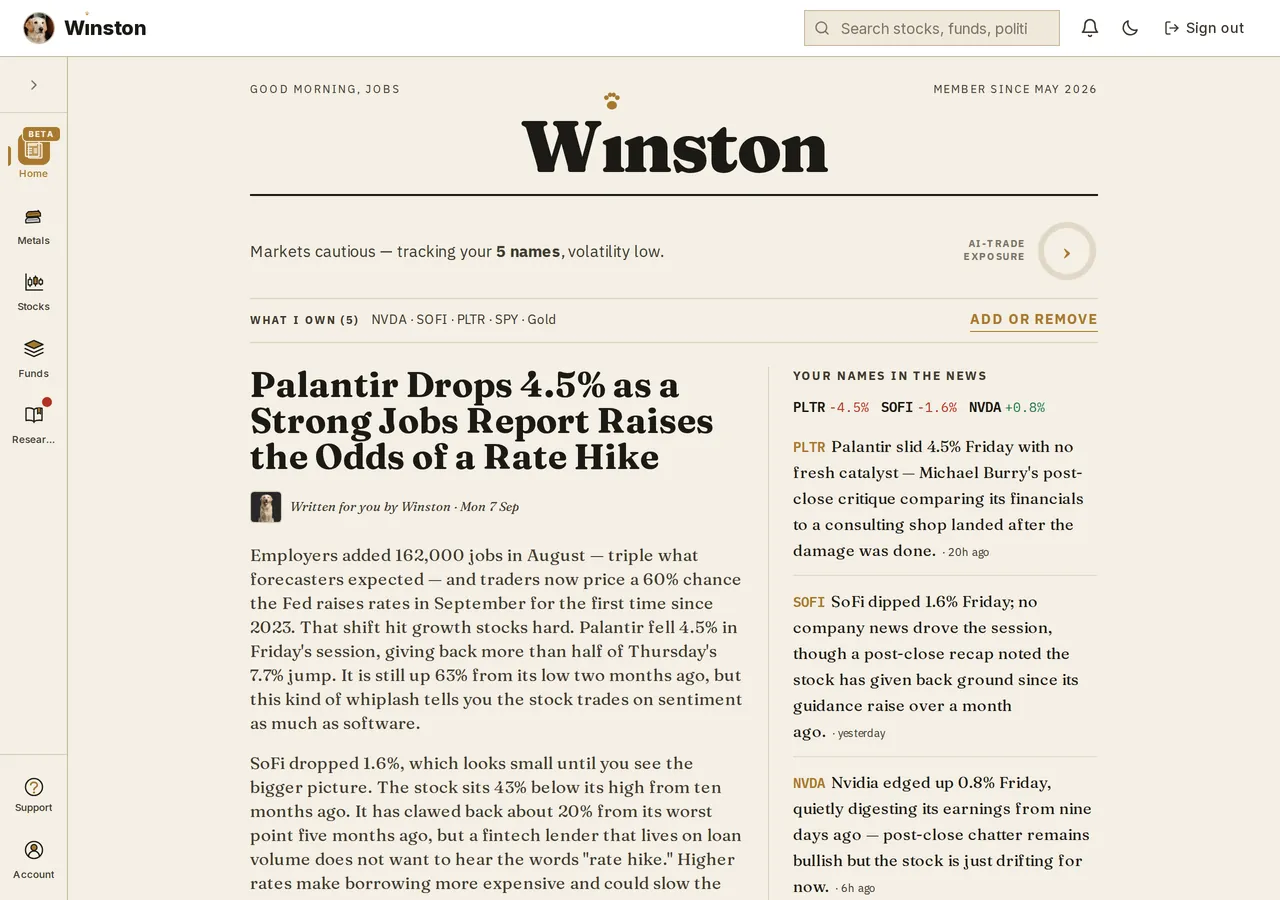
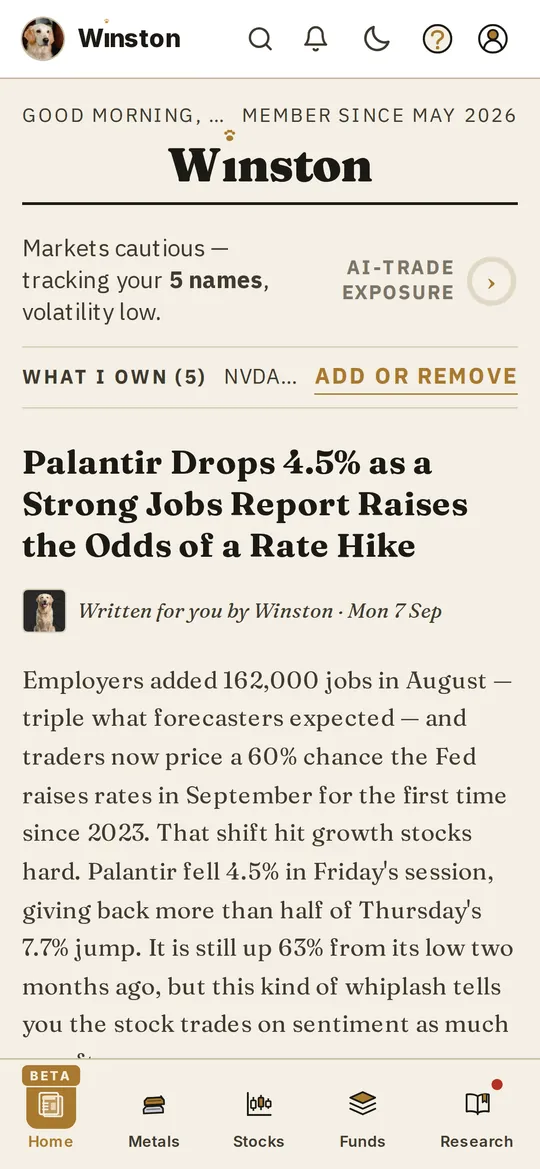
Every morning, Winston writes you a one-page paper about your names and nothing else. What moved, who bought, who sold, and what it means for you — in plain English, before your first coffee is cold.
Winston is a publication, not investment advice. It tells you what happened to the companies you own; what you do about it is your decision alone.
You've felt it before — finding out too late.
A company you own reports a monster quarter. The stock jumps at the open. You hear about it at dinner, from a friend who doesn't even hold it.
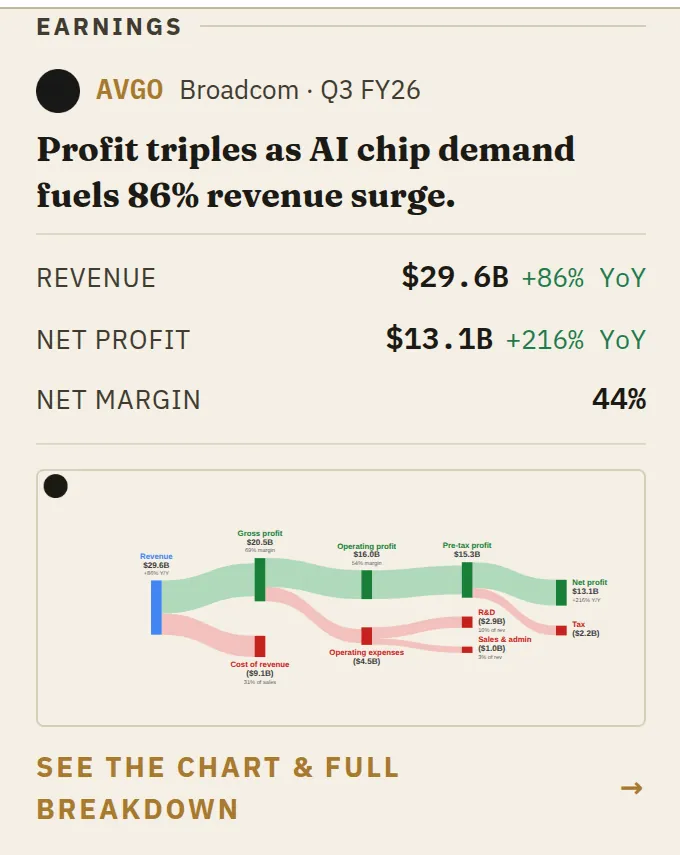
That ends tomorrow. When one of your names reports, Winston reads the numbers the same day they land and writes them up for you in three lines: what came in, how it compares to last year, and whether the profit is real or just clever accounting.
You see the record quarter the morning it happens — not the week after, when everyone else already has.
You always suspected the people who run the company know something you don't.
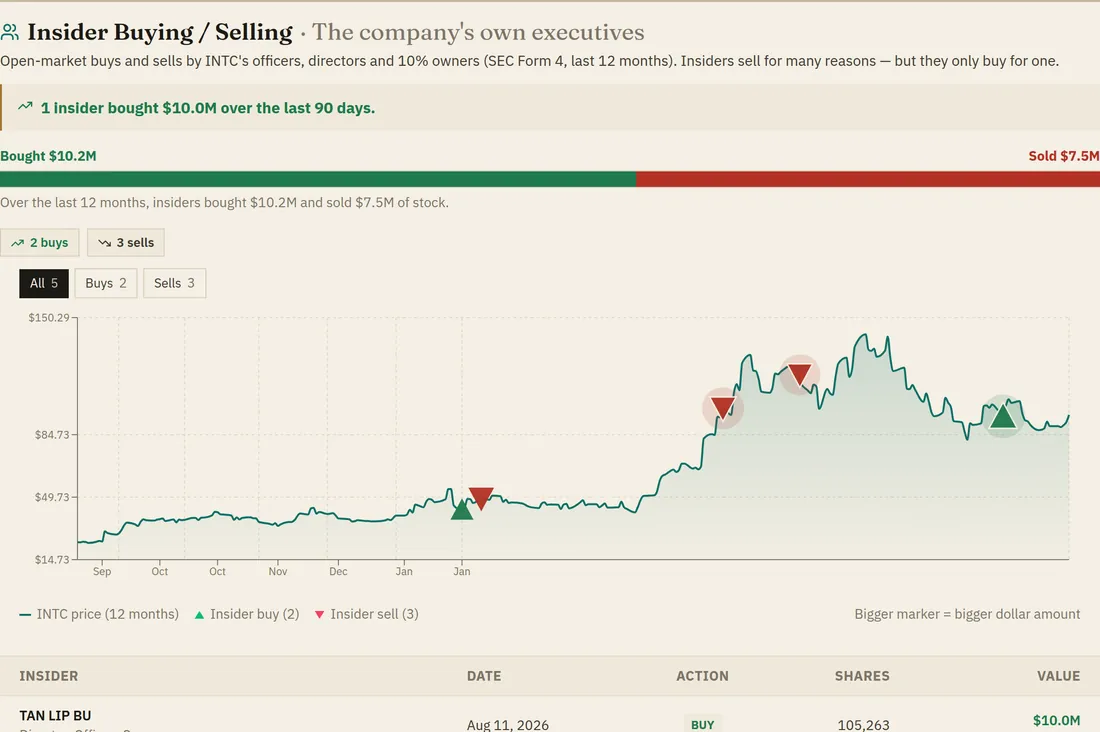
They do. And by law, they have to tell you when they put their own money in — or take it out. The trouble is, that notice is buried in a government filing nobody reads.
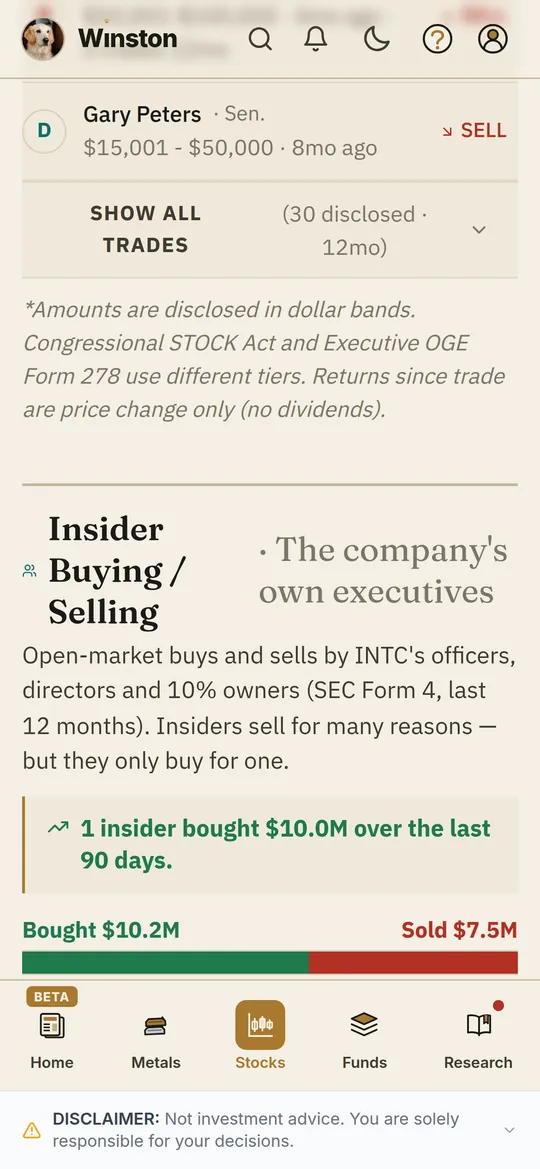
Winston reads them. The open-market buys and sells the officers and directors of your names file, laid out on one chart against the share price. When a chief executive buys ten million dollars of his own stock with his own money, you'll know the day it's filed — and when the buyers turn into sellers, you'll know that too.
Insiders sell for many reasons. They only buy for one.
You've long had a feeling that the people who write the rules do rather well in the market.
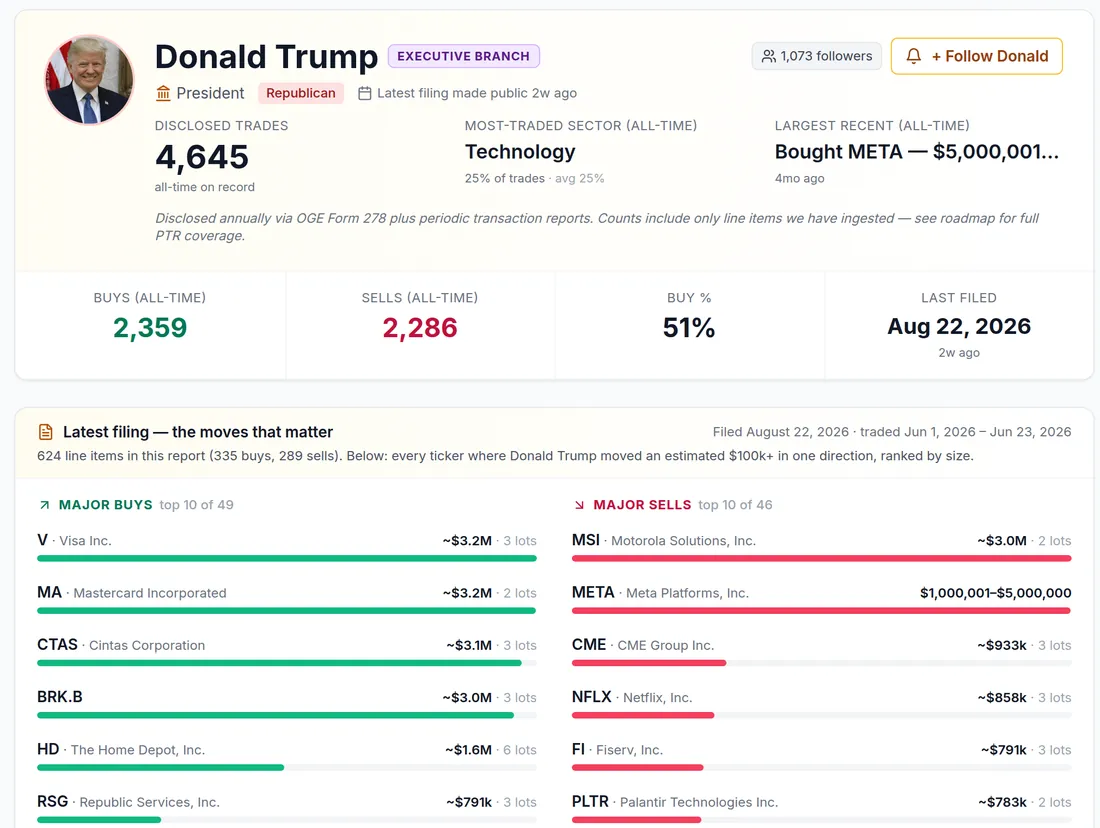
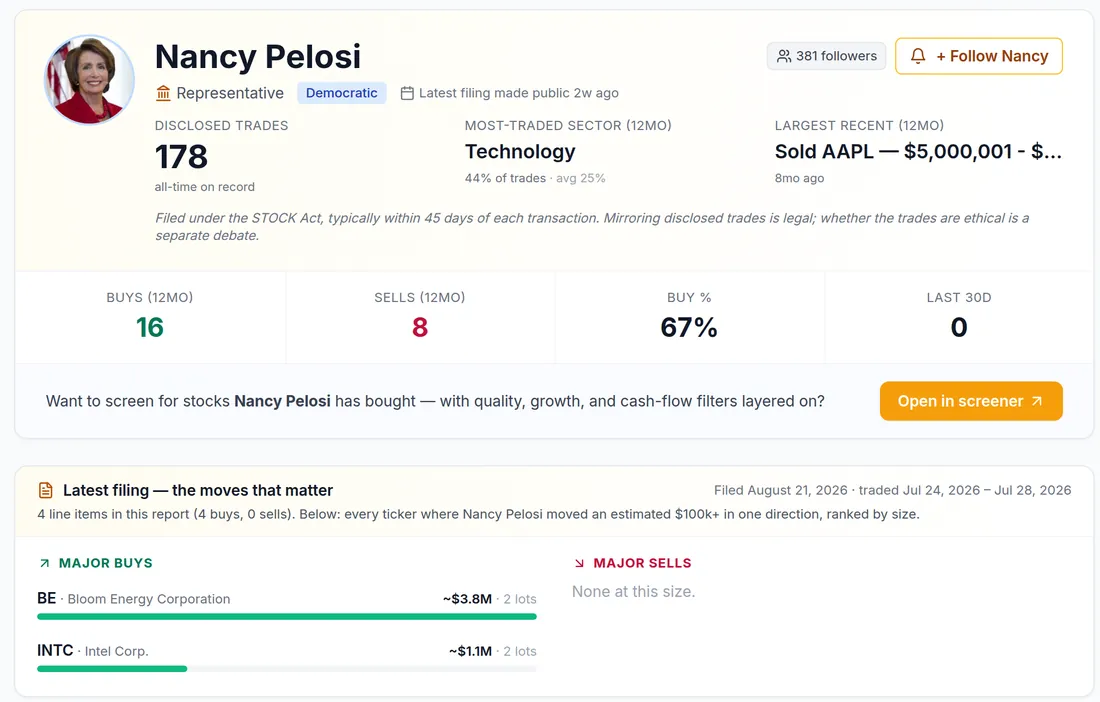
You were right. Members of Congress and the White House must disclose their trades — and they do, in scanned forms, weeks later, in a format designed to be ignored.
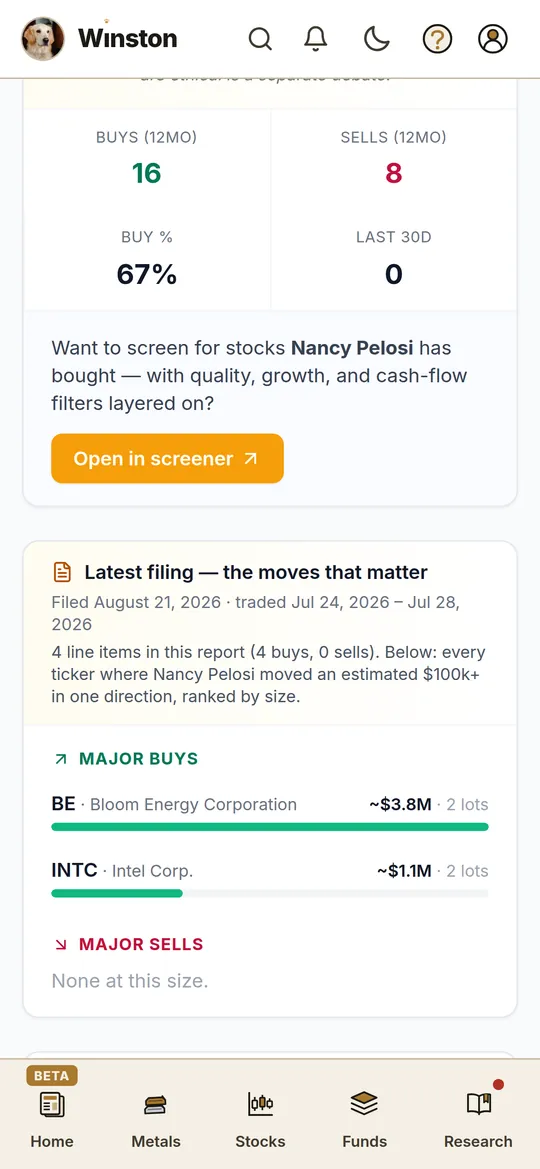
Winston follows the politicians who file, for you. Nancy Pelosi's latest filing. Donald Trump's 4,645 disclosed trades. Which sector they favour, what they just bought, what they just sold — and, most useful of all, when one of them touches a stock you own.
You don't have to copy them. But you'll never again be the last to know what they did.
You bought the fund because the name felt right.
Most people do. Then the fee quietly takes a slice every year, and the "S&P 500 fund" you own turns out to hold the same seven companies as the other three funds you own.
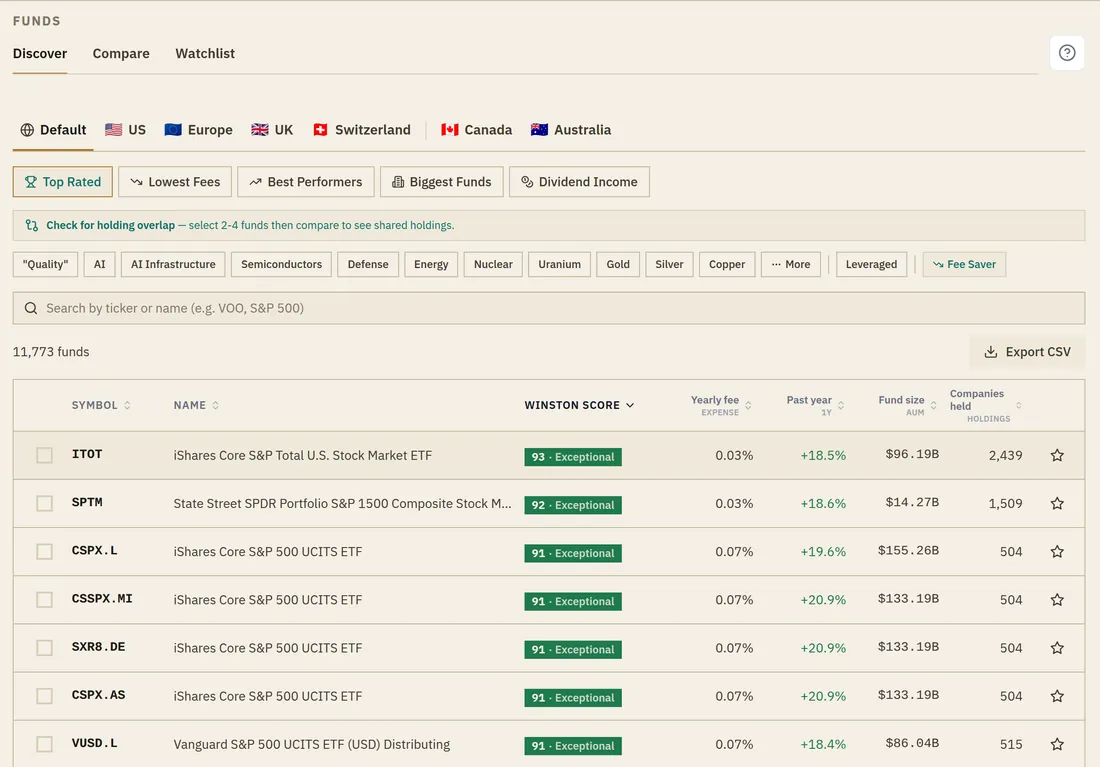
Winston rates 11,773 funds and ETFs on one screen. Sort by fee, by past year, by size. Pick a region — US, Europe, UK, Switzerland, Canada, Australia. Tap "Check for holding overlap" and see, in seconds, whether your four funds are really one fund wearing four hats.
You'll see the cheapest, highest-rated funds by Winston's score that do what you actually wanted — and exactly what you're paying for each.
Read it for a whole month. Then decide.
Seven days free, then a 30-day money-back guarantee. If your morning paper isn't worth the money to you, ask for every penny back.
Somewhere out there is the best company in the industry you love. It may not be in your country.
The world's best-run chip company might be Dutch. The best miner might be Canadian. The best insurer might be Swiss. Most apps stop at the American border and call it "the market."
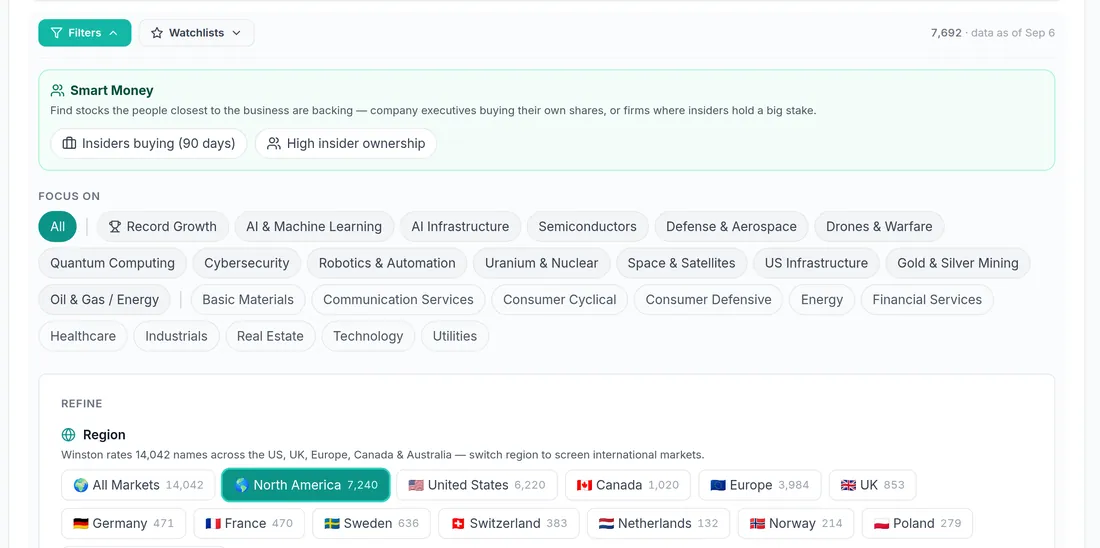
Winston rates 14,042 companies across the US, Canada, the UK, Germany, France, Sweden, Switzerland, the Netherlands, Norway, Poland, Australia and more — the same score, the same filters, the same morning paper. Switch region with one tap.
You get to find the best-rated company in the industry, wherever it happens to be listed.

Winston taps you on the shoulder. He doesn't shout.
A CEO buys. A politician files. One of your names reports a record quarter. Your paper is ready. One quiet tap on the lock screen — and only about the names you told him you own.
Tomorrow morning is coming,
ready or not.
You can open six tabs, skim three newsletters and still miss the one thing that mattered to your money. Or you can open one page, written for your names, and be done before the kettle boils.
P.S. Setting up takes about thirty seconds — you type in the names you own, and that's it. The next morning, the paper is on your phone. If after a month you don't look forward to opening it, email us and we'll return every penny you paid. No forms, no questions.
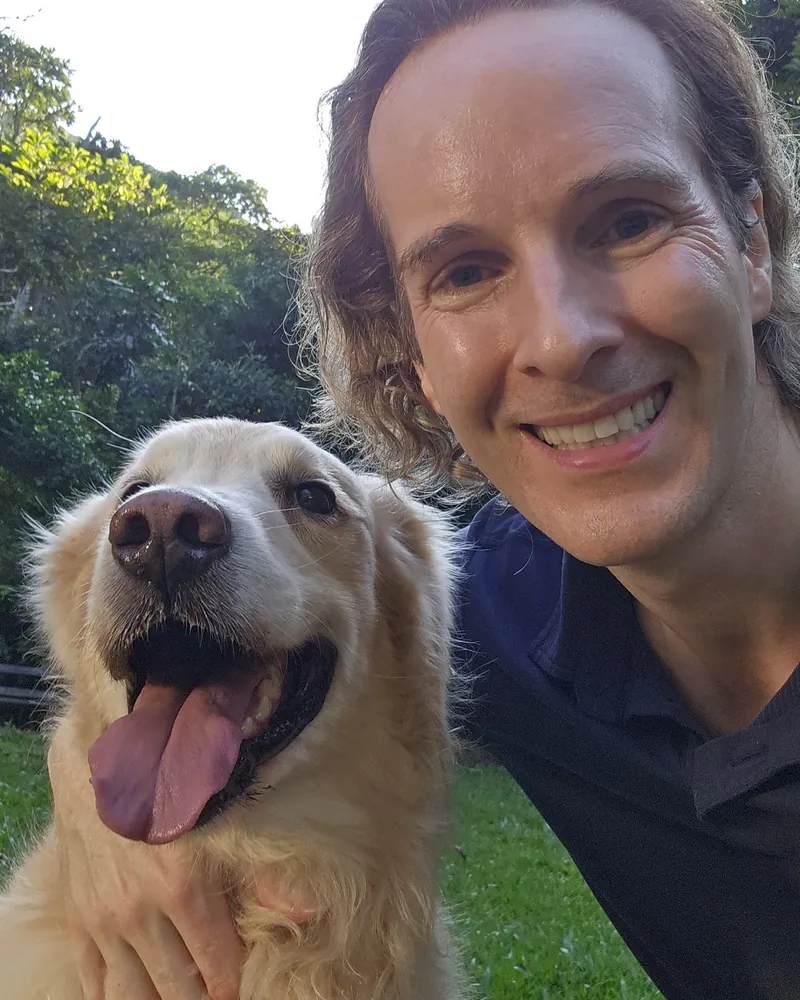
Written for you by Felix Prehn and Winston, his adopted golden retriever.
I'm Felix. I've spent years teaching ordinary people how to read a company the way a professional does — and I kept hearing the same thing: "I understand it, Felix. I just don't have the time." So I built the thing I wished existed: a morning paper about your names, and nothing else.
Winston is my adopted golden retriever — the mascot, the byline and the reason there's a paw on every page. He doesn't pick your stocks. He just makes sure you never miss what happens to them.
 One page. Your names. Every morning.