 Winston
162000 jobs and the Fed meets in 11 days
August payrolls came in at 3 times the forecast, and bond traders now price a better than 58% chance of a rate hike.
Saturday, 5 September 2026
Wall Street expected 55000 new jobs in August. It got 162000. Three to one.
So now you've got an economy running on $96 oil and $5.85 diesel, which is a record, and it just added jobs at a pace nobody predicted. Does the Fed raise rates on 16 September? Bond traders say probably, with odds above 58%. But the VIX, a gauge of how much stock traders expect prices to swing, closed at 14.53 on Friday. Weirdly calm. Almost suspiciously calm, given what's sitting on the calendar.
Stocks fell, bonds sold off
The S&P 500 dropped 0.4% to 7717.81. The Dow lost 272 points. And the Nasdaq gave back Thursday's entire rally.
Gone by morning.
Now why does a strong jobs number hurt stocks? Because if the Fed hikes, bonds start paying you more. Bonds are about the safest thing you can own. So your money has somewhere else to go, and shares have to compete with that.
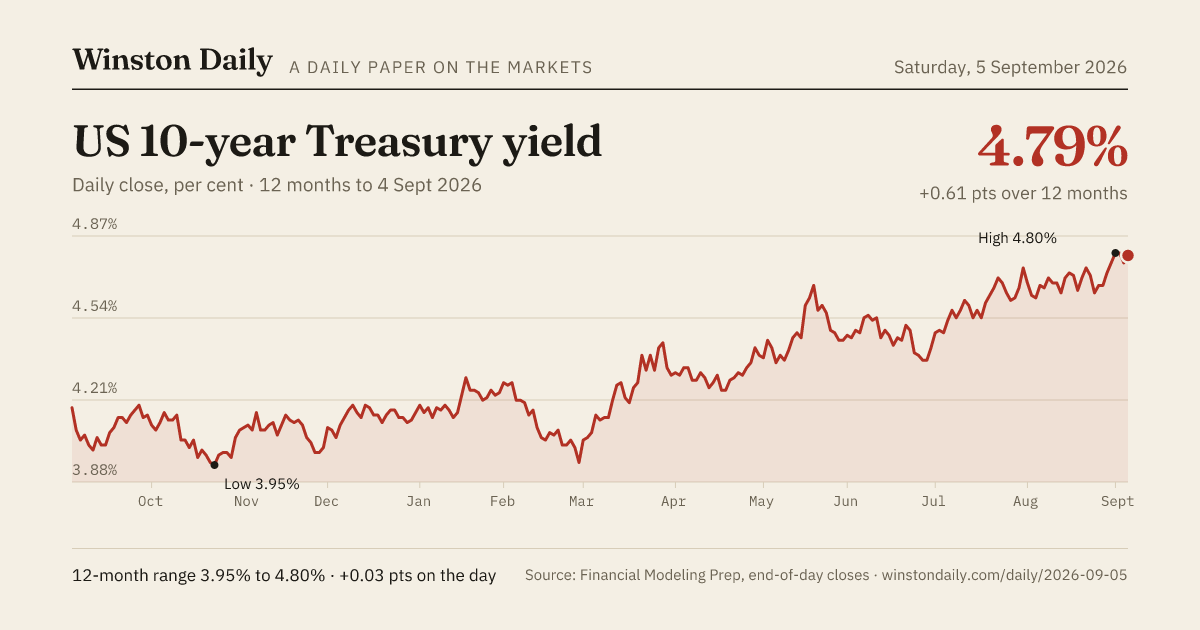
The 10-year Treasury yield, the interest rate the government pays to borrow for a decade, rose to 4.785%. The 2-year hit its highest since January 2025. And if you carry a floating-rate mortgage or a credit card balance, the 16 September meeting is the one that sets what you pay next.
$96 oil and record diesel
Brent crude closed Friday at $96.28 a barrel. WTI settled at $91.48. Neither has been below $90 for a month.
But crude is only part of it. Diesel hit $5.85 a gallon nationally, past the old record of about $5.81 from 2022. A year ago it was $3.71. That is 58% in 12 months.
In California, $7.70.
And you pay it even if you never touch a diesel pump. Trucks carry your food, your furniture, your packages. When diesel costs more, moving all of that costs more, and that feeds straight into the inflation number landing next week.
The Strait and the sanctions
So why is oil this high? The Strait of Hormuz, the narrow waterway between Iran and the Arabian Peninsula, carries roughly a fifth of the world's oil. Flows are reportedly running 60% below normal after U.S. strikes on Iran in late August. No satellite confirmation on that figure, so treat it carefully. But even half that disruption keeps prices here.
Now Washington is squeezing the money side too. Treasury sanctioned Turkey's Golden Global Bank on Friday for helping Iran move cash through the global banking system. Secretary Bessent said he hopes no more banks will need the same treatment.
Hopes. When one bank gets cut off, other banks panic, they stop handling payments for anyone who looks risky because they are afraid of losing access to the dollar system themselves, and the result is less Iranian oil reaching the market. Your fuel bill stays high.
The Fed, JPMorgan and the president
JPMorgan's top global strategist says the Fed has quietly stopped trying to get inflation back to 2%. Inflation is running at 3.3% on the Fed's own preferred measure. And JPMorgan still says no hike this year.
Bond traders disagree. Futures say 58%-plus for a hike on 16 September.
Somebody is about to lose a lot of money.
Now add the president. Trump told reporters Friday he could halt trade with every country running a surplus with the U.S., China, the EU, Mexico, Vietnam, unless the Fed cuts rates. You buy clothes and electronics and cars from all of them. So if he follows through, your prices go up, which is the opposite of what a rate cut is supposed to fix. Can the Fed actually cut with 162000 jobs and $96 oil? The inflation print next week is what forces an answer.
Metals at time of writing
Gold spot sits at $4428.95, barely changed from Thursday's close of $4429.83. But step back one day and gold jumped more than 2% in a single session on Thursday.
2% in one session. That is not a calm market buying jewellery. That is traders hedging against something going wrong.
Silver spot is $66.17, up from a prior close of $65.99. Copper sits at $6.68 a pound.
Who wins from each story
JPMorgan runs one of the biggest bond trading desks on earth. A surprise hike hurts its clients. So why are they telling you no hike is coming? Ask yourself that.
Gulf oil producers, every one except Iran, earn more per barrel while supply stays tight. And the Fed needs you to believe it will act. If you believe a hike is coming, you might spend less, borrow less, cool the economy a bit, all before a single rate actually moves.
So which version is right? You do not have to guess yet.
What is scheduled next
Next week's inflation report lands days before the 16 September Fed meeting. If the August reading comes in above the expected 3.4% annual rate, a hike goes from likely to nearly certain. That print, not the president's trade threats, not JPMorgan's call, is the number that decides what your borrowing costs do next.
About this issue
Issue compiled from the Saturday, 5 September 2026 desk notes. Page published Friday, 25 September 2026. Metal prices are spot at the time of writing. Figures come from the sources set out in the editorial standards. Corrections: [email protected].
Winston Daily is a publication, not a broker or adviser. Nothing on this page is investment advice. Prices and figures are as reported on the day and may have changed.